The sound of rain has a calming effect. The patter of raindrops on a canopy of leaves or the drumming on a car roof, the gentle tone of drizzle, or the intense impact of a cloudburst—all these sounds form a wide spectrum of auditory experiences, usually without us being consciously aware of their distinct qualities. But what if these sounds were given a different tone, altered, or even made audible at a recognizable pitch?
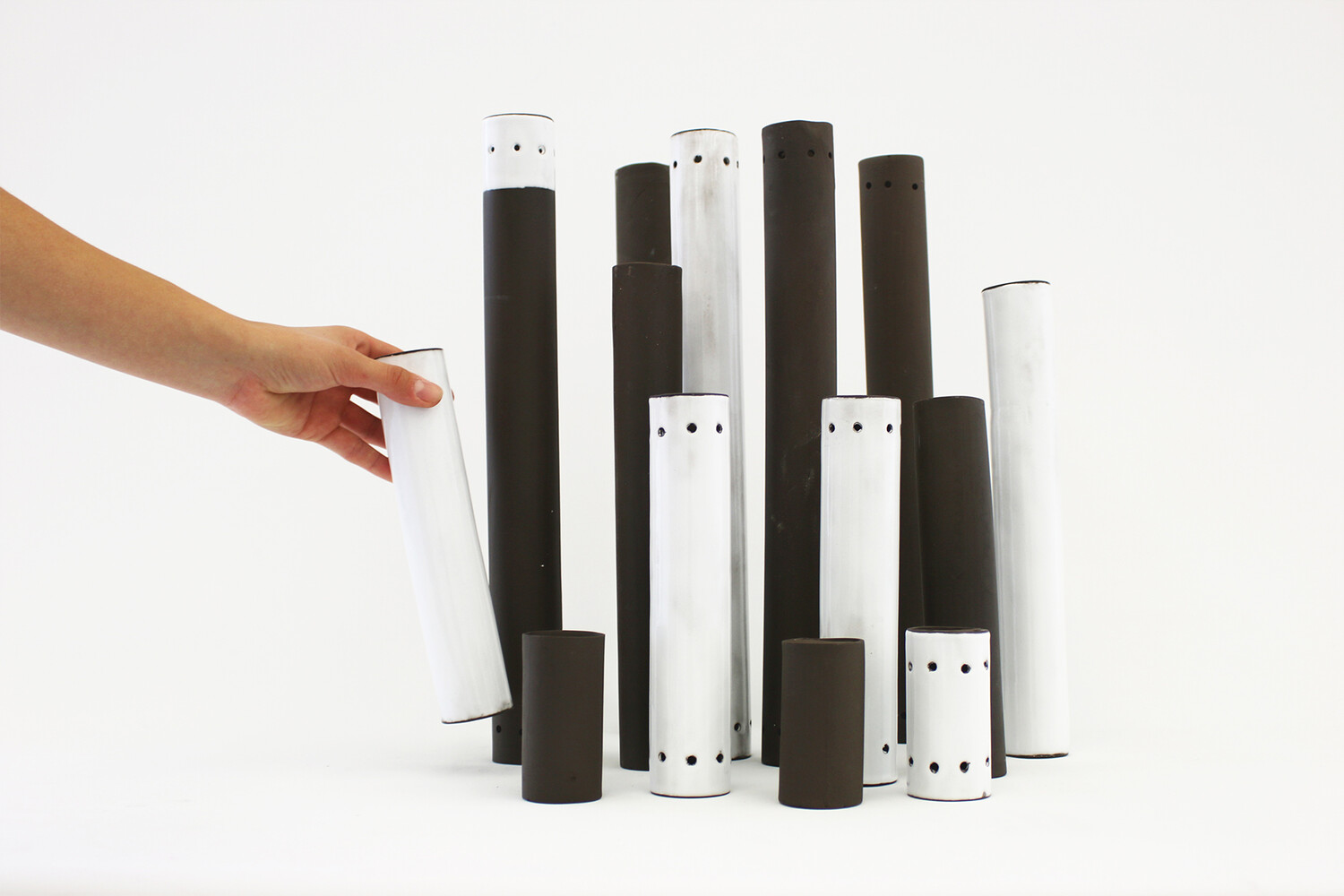
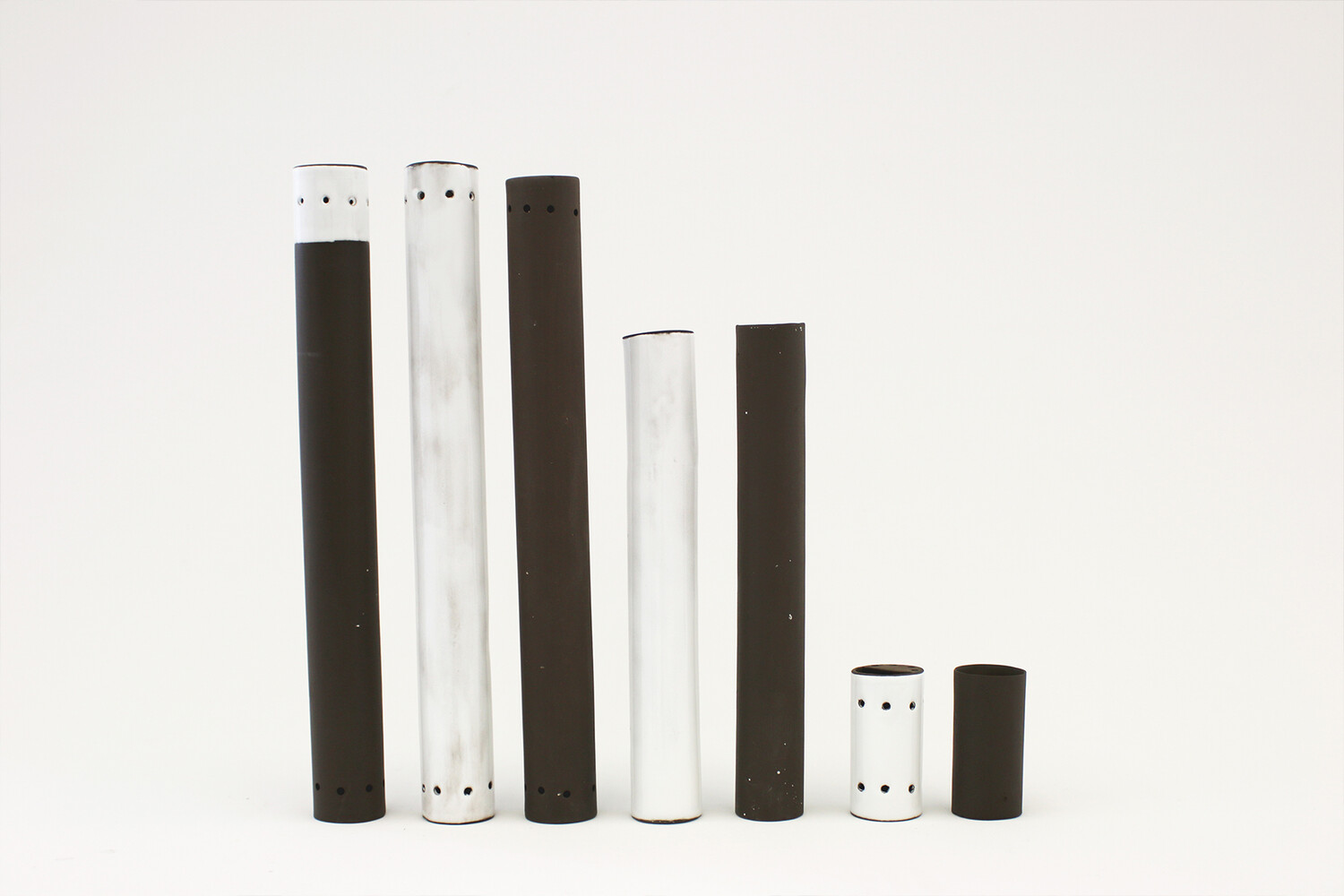
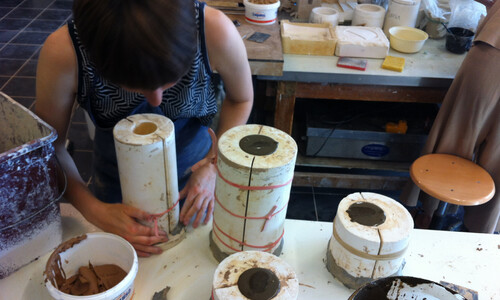
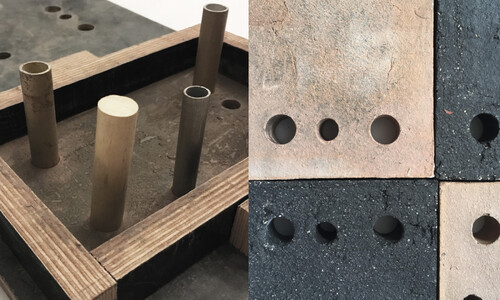
To make the sound audible, a hollow body—a resonator—is created that amplifies the noise. In principle, it functions like the resonating body of a musical instrument. Various tubes, each with different lengths and diameters producing different frequencies, are arranged so that, in interaction with the rain, they create distinct sound effects.
-
When rain hits a horizontally positioned tube, its natural resonance is primarily activated. The impact of the raindrop is acoustically amplified.
-
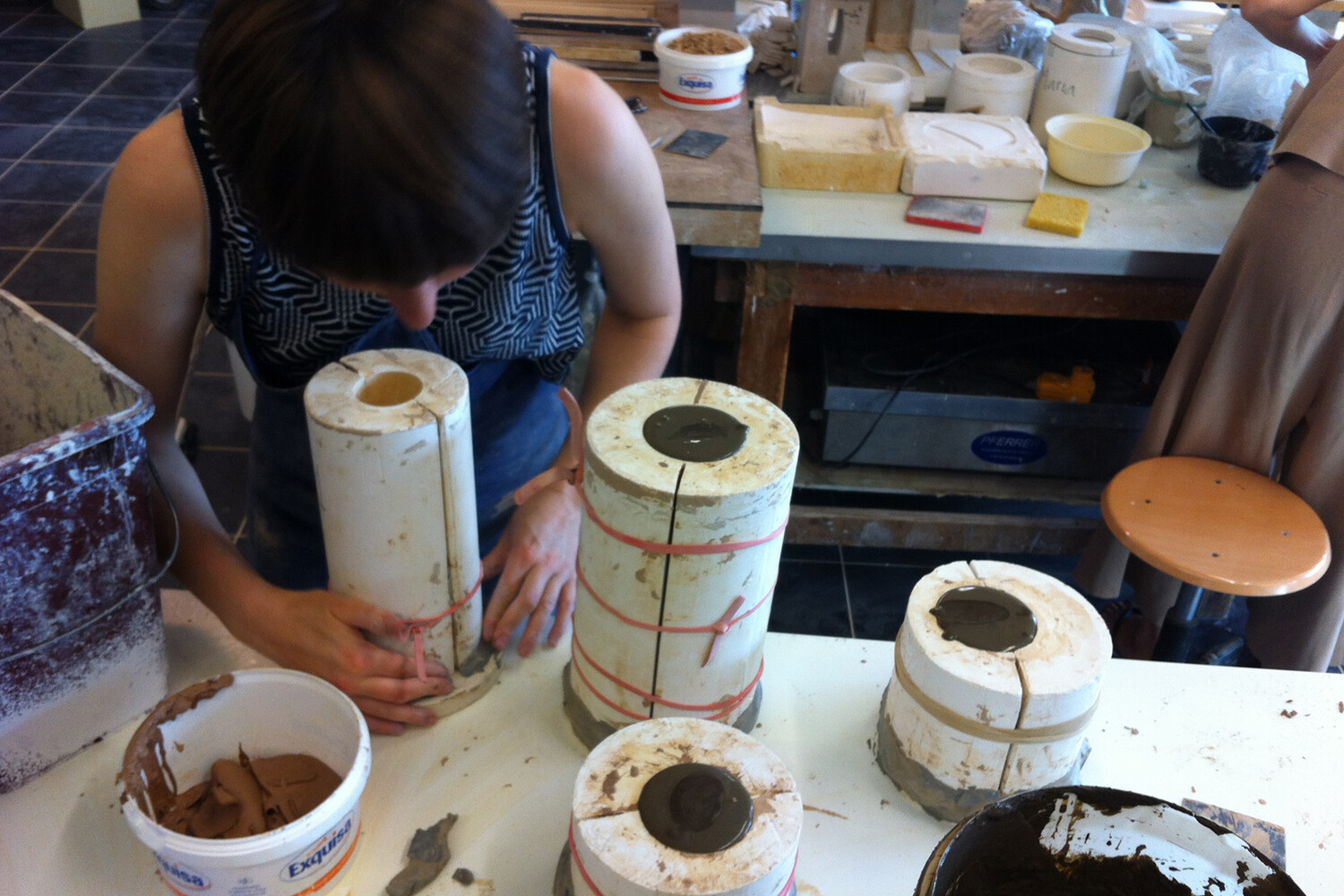
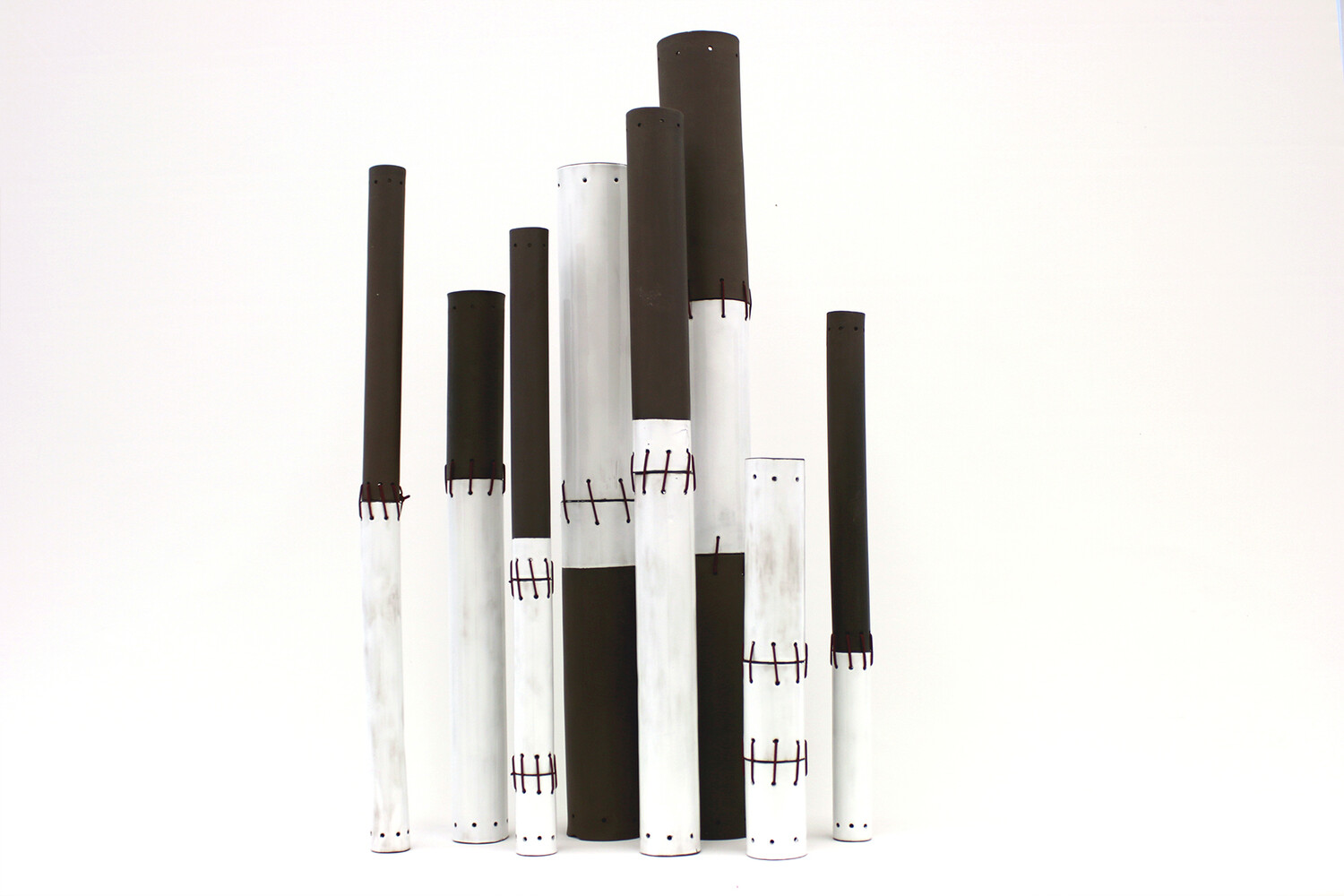
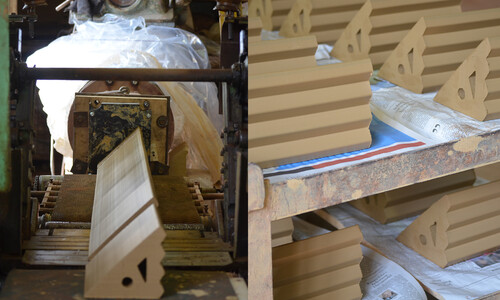
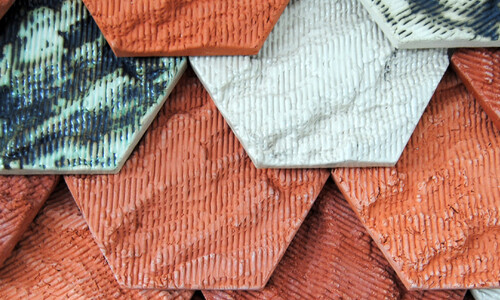
When the tubes are positioned vertically, the rain enters directly into the interior. Inside, it is intercepted by multiple intermediate platforms arranged in a staggered, terrace-like manner. The sound of the water is modified in its characteristics by the hollow body. The acoustic properties also depend on the material and firing temperature. Additionally, a glaze is applied to the clay to partially seal the open-porous surface. Finally, the tubes are connected into a larger ensemble using a rubber cord.
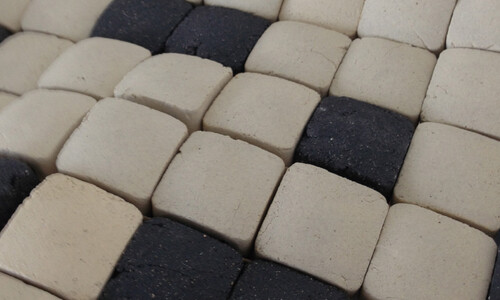
The arrangement of the stacked tubes resembles felled trees in a forest. Whether as a freestanding object in a room or mounted on the exterior façade of a building, the context is sonically activated by the object. For this project, it was particularly important to realize the idea using the regional clay from Sauen; in this way, the region gains its own sound produced through the material.