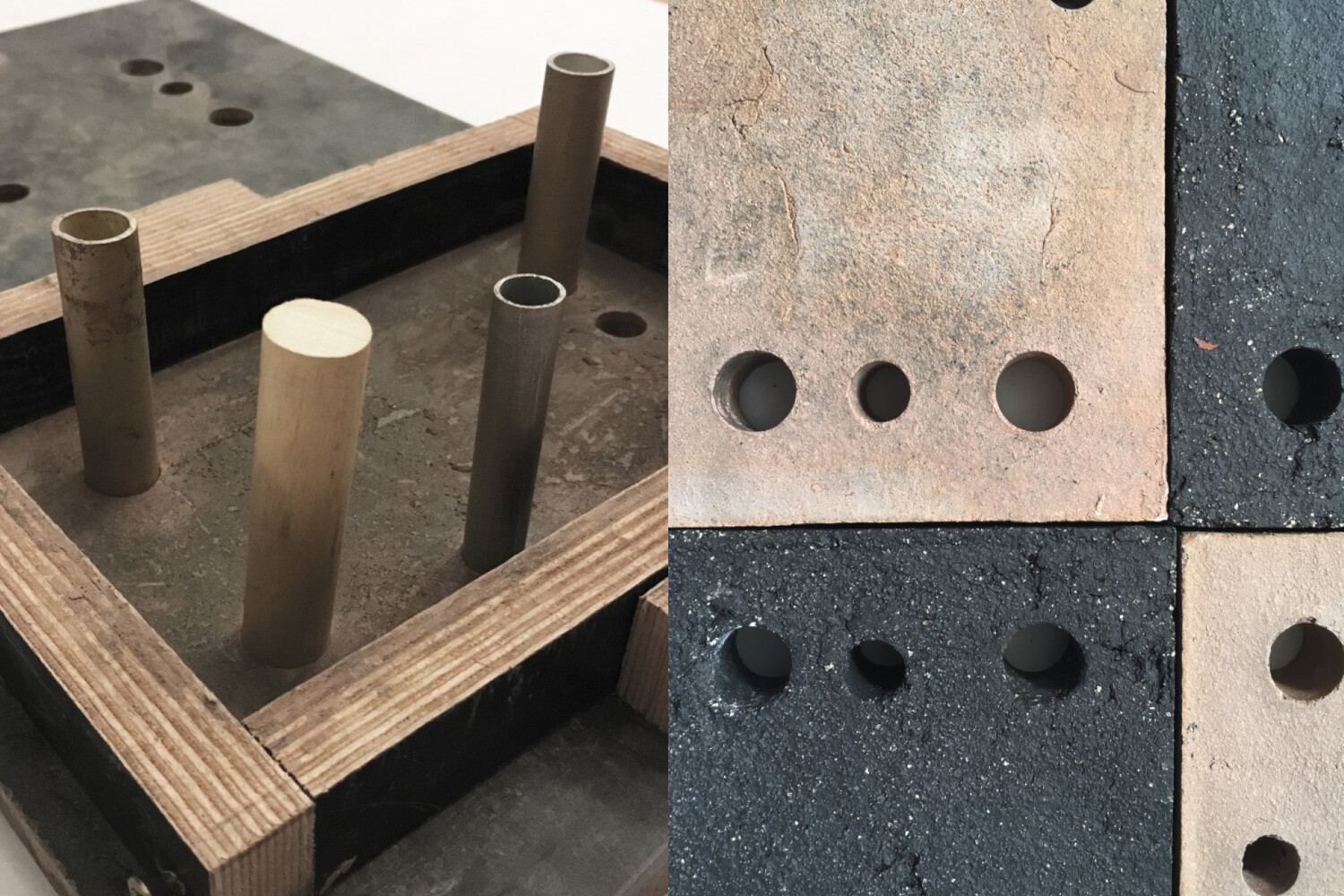
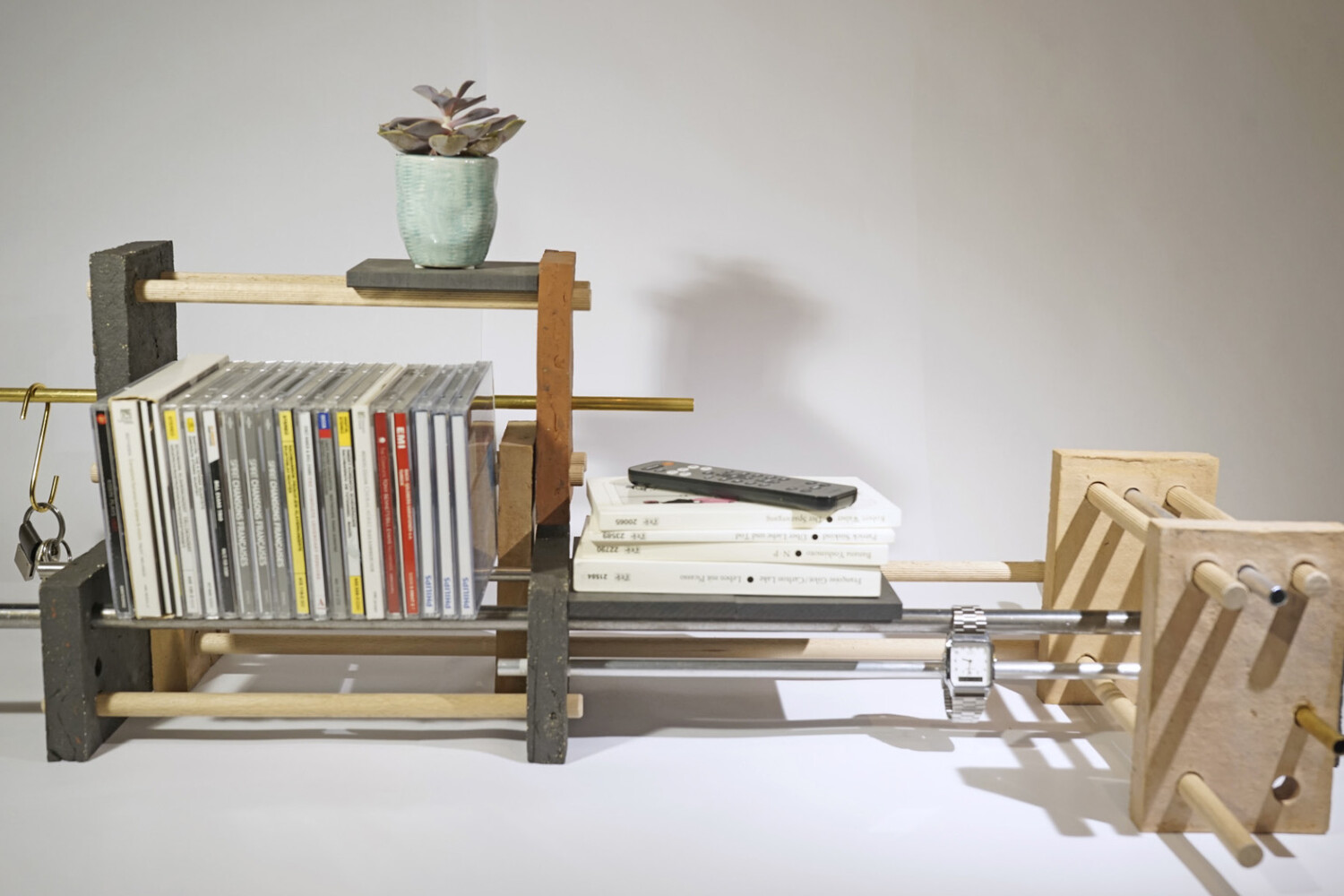
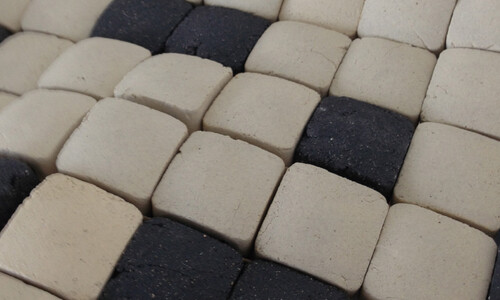
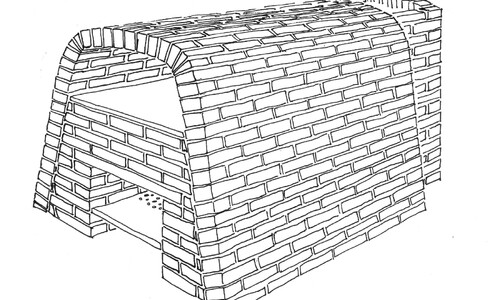
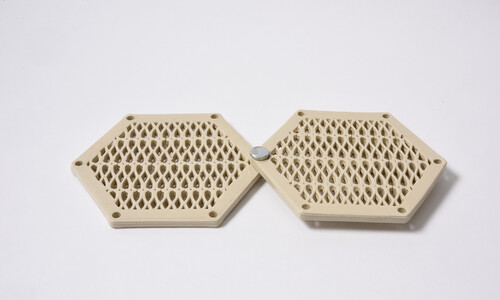
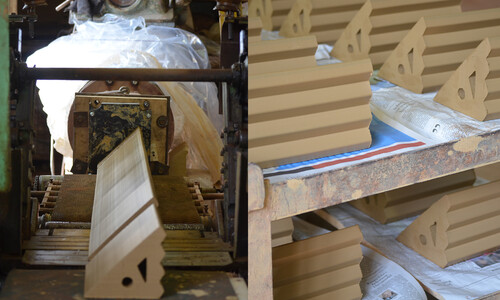
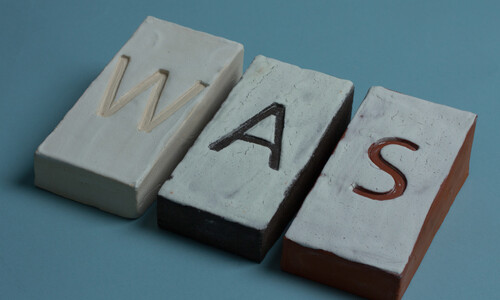
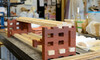
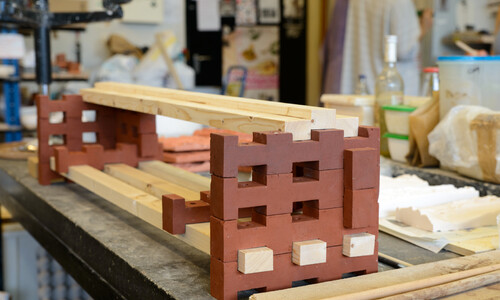
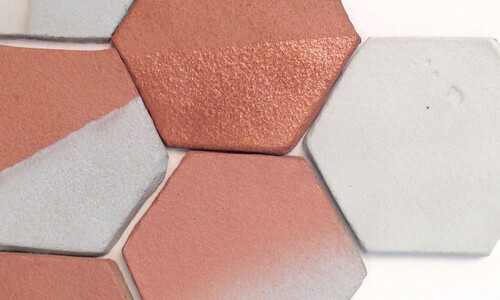
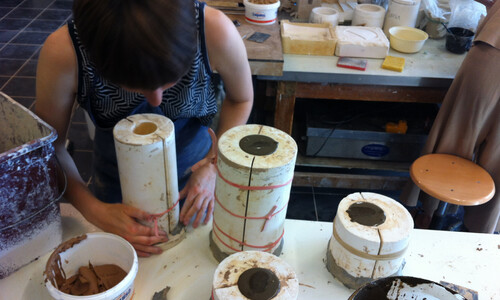
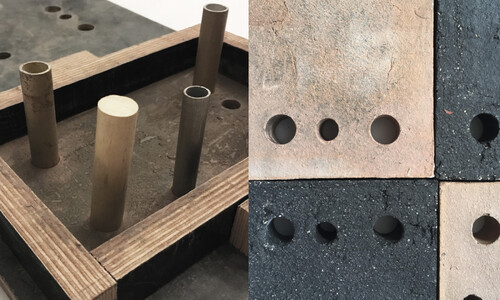
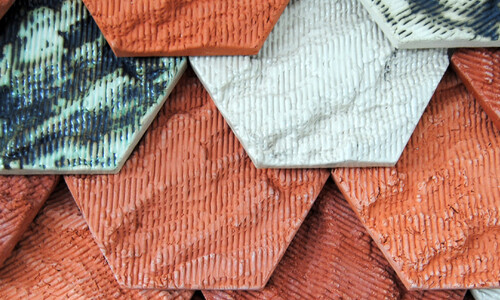
The brick is the original and central element of architecture. Here, however, it takes on a different form and function than usual. It is relatively flat, elongated, and in itself already suggests a sense of spatiality. In fact, it resembles more the shape of a wall. At the same time, it appears reduced in scale and is clearly simple and versatile to handle. Through its grid-like perforations, it can be assembled with aluminum or wooden rods into more complex constructions.
The concept is inspired by traditional forms of brick and timber construction, in which both materials are combined to reinforce each other. All bricks have the same shape and size. Their assembly is done using standardized rods that are threaded through the four holes evenly distributed on each brick. This allows regular forms to be built at any scale. At the same time, two additional smaller holes in each brick enable the creation of more irregular arrangements.
The secret of this kit lies in the optical disorientation it generates. Due to the similarity of the materials and forms to real architecture, the assembled objects appear like architectural models, even though their compositions do not exist in real-world buildings. The “originality” of the materials also produces an almost archaic impression. From another perspective, however, they can also be seen as functional objects, usable, for example, as shelves or storage surfaces. While their shapes resemble other pieces of furniture, they differ in their materiality and in their architecturally archaic quality, which evokes the structure of buildings and the outdoor environment.
The other kind of disorientation is more ontological. What is a brick? Normally, it is just a basic element from which a variety of forms can be built, but it has no inherent architectural form itself. A brick is usually understood only as a part, but here it becomes a whole in itself, possessing a distinctive form that normally only emerges in the process of construction.